
New research by beauty and wellness booking platform Fresha reveals a significant rise in online searches for men's dandruff over the last year.
Analysis of Google search behaviour by Fresha using Glimpse found searches for “men’s dandruff” increased by 1,559% between 2025-26 so far, with approximately 27,000 searches in the past month alone.
The surge comes as Danielle Louise, Fresha's beauty and wellness expert, warns that one of the first things many men do when they notice flakes, changing how often they wash their hair, may not necessarily be the answer.
From shampooing the wrong part of the hair to assuming flakes automatically mean a dry scalp, Danielle reveals some of the lesser-known mistakes men make when washing their hair.
How Often Should Men Actually Wash Their Hair?
According to Danielle, there isn't one number that works for everyone: “Men often want a straightforward answer like twice a week or every other day, but how often you need to shampoo really depends on your scalp, hair type and lifestyle. If you have fine or straight hair and your scalp becomes oily quickly, you might need to wash it every day or every other day. Someone with thick, coarse, curly or particularly dry hair may be able to leave considerably longer between washes.
"The better rule is to pay attention to your scalp. If it regularly feels greasy, itchy or there's a noticeable build-up of styling products, simply trying to stretch out the time between washes isn't necessarily doing your hair any favours.”
Flakes Don't Automatically Mean Your Scalp is Dry
One of the first things people assume when they see flakes is that their scalp must be dry, Danielle explains. They might start washing their hair less or putting oils onto the scalp, but dandruff isn't necessarily caused by dryness.
Dandruff can be associated with an oily scalp and seborrhoeic dermatitis too, so avoiding shampoo because you're worried about drying the scalp out could be completely the wrong approach for you. If you're experiencing persistent or severe dandruff, redness, soreness or itching, that's when I'd stop experimenting with different routines and get advice from a pharmacist, GP or dermatologist.”
Shampoo Your Scalp, Don't Scrub Your Hair
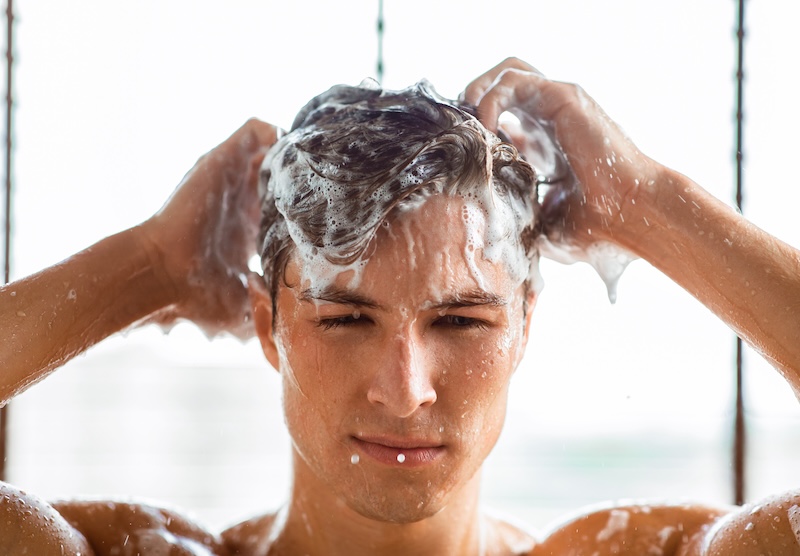
Another surprisingly common mistake is where men actually put their shampoo. Danielle says: “Shampoo is primarily there to clean your scalp. That's where oil, dead skin and product build-up accumulate.
"You don't need to aggressively scrub shampoo through every centimetre of your hair. Concentrate on massaging it into the scalp and roots. When you rinse it, the shampoo will travel through the rest of the hair. This becomes particularly important for men who are growing their hair longer, because repeatedly scrubbing the ends can contribute to them feeling dry.”
Your Hair Products Matter
For men using wax, clay, pomade, texture powder, hairspray or styling creams, Danielle says washing frequency shouldn't just be dictated by whether the hair looks greasy.
“Men can put several products into their hair throughout the week and then wonder why it suddenly feels heavy, greasy or difficult to style. What you're seeing might not just be natural oil. It can also be product build-up.
"If you're regularly using styling products, making sure you're properly cleansing the scalp becomes particularly important. Occasionally using a clarifying shampoo may also help with stubborn build-up, although you don't need to use one every day.”
Conditioner isn't Just for Long Hair
Danielle also says men shouldn't assume short hair means conditioner is unnecessary. “Conditioner isn't something that's reserved for women or people with long hair.
If your hair feels rough, dry or difficult to manage after shampooing, conditioner can help. It's particularly worth considering if you've bleached or coloured your hair, you're growing it longer or you're noticing dryness and breakage. Apply it mainly through the lengths rather than loading it directly onto the scalp, especially if your roots already become oily quickly.”
Your Hair Washing Routine Will Change With Age
Danielle says another overlooked factor is that men's hair and scalp can change with age. “The routine you've followed since you were a teenager isn't necessarily the routine you'll need forever.
"Oil production, hair density, texture and the condition of your scalp can change as you get older. If your hair suddenly doesn't respond to your normal routine in the same way, don't automatically assume you need more product. It may be time to rethink how you're actually looking after it.”
Different Routines for Different Men's Hair
Danielle concludes: “Stop treating hair washing like there's a magic number everyone needs to follow. If your scalp becomes oily quickly, washing frequently isn't automatically bad. Equally, if your hair is naturally dry, thick or curly, shampooing every day may be unnecessary.
Scalp condition, hair texture, exercise, styling products and how quickly you become oily all matter more than somebody on social media telling you how many days you should go without washing your hair. "If dandruff suddenly becomes persistent, severe or is accompanied by redness, soreness or significant itching, don't just keep changing shampoos. Get it checked."
Search Methodology
Search data was sourced by Fresha using Glimpse, analysing Google search behaviour for the term “men’s dandruff” over a five-year period. The data shows approximately 27,000 searches in the most recent month, representing a 1,559% increase compared with 2025.
You might also like:
- Meet the Men's Hairdresser of the Year 2026 Finalists
- Eddie's Street Cuts owner to cycle 4,000 miles across US providing free haircuts to homeless
- Mentored By Menspire Offers Access to Barber Industry’s Biggest Names